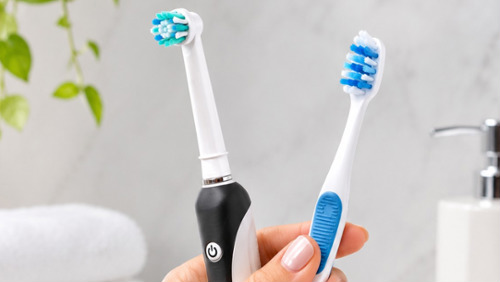
Quick answer: The best toothbrush is the one you will use well, twice a day for two minutes. Manual and powered brushes can both clean your teeth thoroughly. Choose soft bristles, a head small enough to reach your back teeth, and a brush with the ADA Seal of Acceptance. Replace it every three to four months, or sooner if the bristles look frayed. Extras like timers and pressure sensors can help, but they are not required.
Black Friday ads are full of toothbrushes with apps, lights and long lists of modes. At Finer Smiles Dental Practice in Encino, patients often ask Dr. Nairy Sekayan which one to buy. The honest answer is simpler than the ads suggest. Here is what really matters.
Manual or powered?
Both work. Manual and powered toothbrushes can both clean teeth well, as long as you brush for two minutes twice a day with fluoride toothpaste. A powered brush can be a good choice if you have arthritis or limited hand movement, wear braces, find it hard to brush for a full two minutes, or simply like how it feels. A manual brush is easy to travel with, needs no charging, and works just as well when you use good technique.
What to look for in any toothbrush
- Soft bristles. Firm or even medium bristles can wear on your gums and enamel. Soft bristles clean well without the damage.
- The right head size. A smaller head reaches the back of your mouth and behind your last molars more easily.
- A comfortable handle. You should be able to hold it at an angle and reach every tooth without strain.
- The ADA Seal of Acceptance. It shows the brush was checked by independent experts for safety and how well it cleans.
Extras that can help on a powered brush
- A two minute timer. Many people brush for far less time than they think. A timer that buzzes every 30 seconds helps you spend time on each part of your mouth.
- A pressure sensor. If you tend to scrub hard, a sensor that warns you when you press too firmly protects your gums.
- Easy to find replacement heads. You will be changing the head every few months, so make sure they are easy to buy.
Features like apps, many cleaning modes and special lights are nice to have for some people, but they are not needed for a healthy mouth. Spend your money on a brush you like using and the replacement heads to go with it. Whichever electric toothbrush you choose, use it on its lowest setting.
Cleaning between your teeth
A toothbrush cannot reach the tight spaces between your teeth, which is where many cavities and gum problems start. Clean between your teeth once a day with floss, floss picks, small interdental brushes or a water flosser. If you are not sure which tool is easiest for you, ask us at your next visit and we will show you how to use it.
Toothbrushes for kids
Look for a soft brush with a small head and a handle that is easy for small hands to hold. Use a smear of fluoride toothpaste about the size of a grain of rice for children under three, and a pea sized amount for children three to six. Help younger children brush until they can do a thorough job on their own, and make it fun with a song or a timer.
When to replace your toothbrush
Replace your toothbrush or brush head every three to four months, or sooner if the bristles are frayed or bent. Worn bristles do not clean as well. Many people also choose a fresh brush after being sick. A new toothbrush makes a handy stocking stuffer for the whole family.
How to care for your toothbrush
- Rinse it with tap water after brushing to remove toothpaste and food.
- Store it upright and let it air dry. Do not keep it covered or in a closed container day to day, because a damp space lets germs grow.
- Keep family toothbrushes apart so the heads do not touch.
- Do not share toothbrushes.
Good technique matters most
A few simple habits make every brushing count:
- Use gentle circular motions. Move the brush in small circles over each tooth.
- Angle the bristles toward your gums. Tilt the brush so part of the bristles rest on your gums, then sweep down on your top teeth and up on your lower teeth.
- Do not press hard. Too much pressure can cause gum recession over time, so keep your touch light.
Hold the brush at a slight angle toward the gumline and use gentle, short strokes. Brush the outside, inside and chewing surfaces of every tooth, and do not forget your tongue. Brushing harder does not clean better. A light touch with a soft brush and fluoride toothpaste does the job. If your gums bleed often or your teeth feel sensitive, let us know. Our general dentistry visits include a cleaning and a check of your gums and brushing habits.
Questions? Ask your Encino dental team
Dr. Nairy Sekayan and our team at Finer Smiles Dental Practice are happy to help you choose the right tools for your mouth. Bring your toothbrush to your next visit if you have questions about it. To schedule a cleaning, call (818) 788 2155 or book online. We are at 5363 Balboa Blvd #440 in Encino, and our team speaks English, Spanish, Armenian, Tagalog and Arabic.
Frequently asked questions
Is an electric toothbrush better than a manual one?
Both can clean your teeth well when you brush for two minutes twice a day with fluoride toothpaste. A powered brush can help if you have limited hand movement, wear braces or have trouble brushing long enough. If you use an electric toothbrush, keep it on the lowest setting.
Should I use a soft or medium toothbrush?
Choose soft. Medium and firm bristles can wear on your gums and enamel, and soft bristles clean well with gentle pressure.
How often should I replace my toothbrush?
Every three to four months, or sooner if the bristles are frayed. The same goes for powered brush heads.
What is the ADA Seal of Acceptance?
It is a mark from the American Dental Association showing that independent experts reviewed the product for safety and effectiveness.
Do I still need to floss if I have a good toothbrush?
Yes. A toothbrush cannot reach between your teeth. Clean between them once a day with floss, picks, interdental brushes or a water flosser.
Sources
- American Dental Association, MouthHealthy. Toothbrushes. https://www.mouthhealthy.org/all-topics-a-z/toothbrushes
- American Dental Association, MouthHealthy. Brushing Your Teeth. https://www.mouthhealthy.org/all-topics-a-z/brushing-your-teeth
This article is general education, not a diagnosis or a treatment promise. For advice about your own teeth, please talk with our office.
