
By Dr. Nairy Sekayan, DDS, Finer Smiles Dental Practice, Encino, CA
Quick answer: Many people do well with a professional dental cleaning and exam about every six months, and that is the schedule we most often recommend at Finer Smiles Dental Practice. But the American Dental Association advises tailoring visits to each person's risk of disease, so some patients need cleanings every three or four months, and a few may need them less often. Your dentist sets the right interval after examining your teeth and gums.
Why "Every Six Months" Is Only a Starting Point
The six-month checkup is a familiar rule of thumb that works well for many people, but it is not one-size-fits-all.
The American Dental Association (ADA) notes that research has not settled on one best recall interval for preventing cavities or gum disease. Instead, the ADA says there is merit in tailoring each patient's recall interval to their individual risk of disease. A Cochrane review, which pulls together the best available studies, reached a similar place: in adults, check-ups every six months and check-ups set by the dentist based on each person's risk led to similar results for tooth decay, gum health, and quality of life.
In plain language, the right schedule depends on your mouth: your gums, cavity history, existing dental work, medical history, and home care habits.
Who May Need More Frequent Cleanings?
Some people build up plaque and tartar faster, or are more likely to develop gum disease. The Centers for Disease Control and Prevention (CDC) lists several factors associated with gum disease, including smoking, diabetes, poor oral hygiene, medications with oral side effects, crooked teeth, teeth grinding, and hormonal changes such as pregnancy or menopause. Your dentist may suggest cleanings more often than every six months if you:
- Have a history of gum disease. Periodontitis cannot be reversed, but the CDC notes it can be slowed down and managed with professional treatment. Patients who have had a deep cleaning often need closer follow-up visits to keep their gums stable.
- Have diabetes. The CDC advises that people with diabetes may need their teeth cleaned multiple times a year.
- Smoke or use tobacco. The CDC lists smoking among the risk factors for gum disease.
- Are pregnant. The CDC notes that people may be more likely to have cavities and gum disease during pregnancy, and that dental care is safe and important at any stage of pregnancy.
- Wear braces or clear aligners. Brackets, wires, and aligners create extra places for plaque to hide, so some patients benefit from extra checkups while their teeth are moving. If you are considering straightening your teeth, our clear aligners page explains more.
- Get cavities often or have a dry mouth. Frequent decay, a lot of existing dental work, or medications that dry the mouth can all be reasons to come in more often.
If your gums are healthy and you rarely get cavities, a six-month schedule (or occasionally a longer one) may be right for you. Either way, the decision is based on an exam, not a calendar alone.
What Happens at a Routine Dental Cleaning?
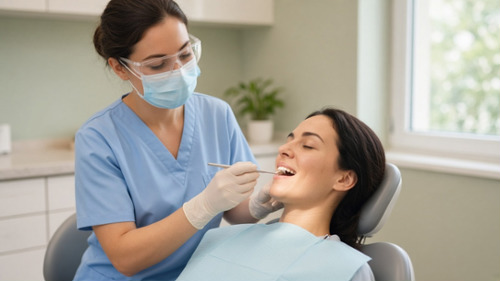
A routine cleaning at our Encino office is usually comfortable and straightforward. A typical visit includes:
- A review of your health history. We ask about changes in your health, medications, and any problems you have noticed since your last visit.
- Removing plaque and tartar. Plaque is a sticky film of bacteria. If it is not brushed away, it hardens into tartar (calculus), which, as the CDC explains, cannot be removed with a toothbrush. Our hygienist removes it with special instruments.
- Polishing. We polish your teeth so they look and feel smooth and clean.
- An exam. The dentist checks each tooth, your gums, and the rest of your mouth for signs of decay, gum disease, and other problems.
- X-rays when needed. Digital X-rays help us find problems we cannot see with our eyes alone. Not every visit needs them.
- Personal advice. We share tips on brushing, flossing, and diet, and recommend when you should come back.
You can learn more about preventive care on our General Dentistry page.
Routine Cleaning vs. Deep Cleaning: What Is the Difference?
- A routine cleaning (sometimes called a prophylaxis) is preventive. It removes plaque, tartar, and stains from the tooth surfaces and just around the gumline in a mouth that is generally healthy.
- A deep cleaning, known as scaling and root planing, is a treatment for gum disease. The CDC describes it as a non-surgical procedure that cleans the affected tooth and root surfaces below the gumline, where bacteria collect in pockets between the teeth and gums.
If your exam shows signs of gum disease, such as bleeding gums, deeper gum pockets, or gums pulling away from your teeth, a deep cleaning may be recommended before you return to regular maintenance visits. To learn about the warning signs, read our article on 5 Signs You Might Need a Deep Cleaning in Encino, CA.
What Patients Should Know
- Gum disease can be silent. The CDC notes that gum disease can often become serious before a person notices symptoms. Regular visits help catch problems early.
- Home care still matters most day to day. Brush twice a day with fluoride toothpaste and clean between your teeth every day.
- Do not wait for pain. If your gums bleed, your teeth feel loose or sensitive, or your bite feels different, call us rather than waiting for your next scheduled cleaning.
- Your schedule can change over time. Pregnancy, a new diagnosis, a new medication, or starting orthodontic treatment can all change how often you should come in.
Frequently Asked Questions
Is it okay to get my teeth cleaned only once a year?
For some low-risk adults, a dentist may decide a longer interval is reasonable. The CDC recommends seeing a dentist at least once a year. Whether once a year is enough for you depends on your gums, cavity history, and overall health, so ask your dentist before changing your schedule.
Why does my dentist want to see me every three or four months?
Shorter intervals are often recommended for people with a history of gum disease, diabetes, tobacco use, or heavy tartar buildup. More frequent visits help keep bacteria under control and allow us to spot changes early.
Is a dental cleaning safe during pregnancy?
Yes. According to the CDC, routine and emergency dental care is safe at any stage of pregnancy, and pregnancy can make gum disease and cavities more likely. Let us know you are pregnant so we can plan your care.
Does a teeth cleaning hurt?
Most routine cleanings are comfortable. If your gums are sensitive or you feel anxious, tell our team. We can go at your pace and talk you through each step.
How do I know if I need a deep cleaning instead of a regular cleaning?
Only an exam can tell for sure. Signs such as bleeding or swollen gums, persistent bad breath, gums pulling away from the teeth, or loose teeth can point to gum disease. Our deep cleaning article covers these signs in more detail.
How often should children get their teeth cleaned?
Many children follow a six-month schedule, but like adults, the best interval depends on their individual risk of cavities. Your child's dentist will recommend a schedule at each visit.
Schedule Your Teeth Cleaning in Encino
If it has been more than six months since your last visit, or you are not sure what schedule is right for you, Finer Smiles Dental Practice is here to help. Our office at 5363 Balboa Blvd, Suite 440, in Encino welcomes new patients and families from across the San Fernando Valley.
Book your cleaning online or call us at (818) 788-2155. You can also reach us through our contact page or learn more about Dr. Nairy Sekayan.
This article is for general education and is not a substitute for a personal dental exam. Your dentist will recommend the cleaning schedule that is right for you.
Sources
- American Dental Association. Home Oral Care (section: "See your dentist regularly for prevention and treatment of oral disease").
- Centers for Disease Control and Prevention. About Periodontal (Gum) Disease.
- Centers for Disease Control and Prevention. Oral Health Tips for Adults and Pregnancy and Oral Health Facts.
- Cochrane. How often should you see your dentist for a check-up? (plain-language summary of Fee PA, Riley P, Worthington HV, et al. Recall intervals for oral health in primary care patients. Cochrane Database of Systematic Reviews, 2020).